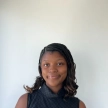
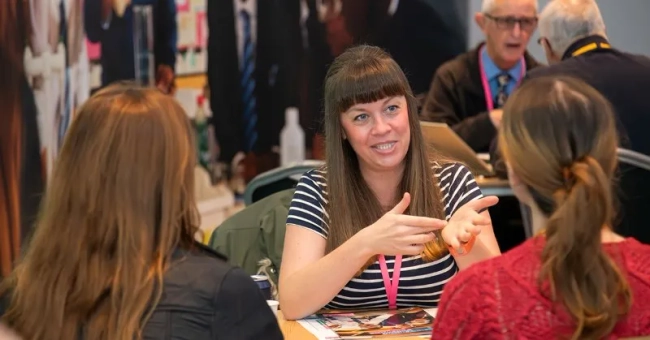
Victoria- Financial Modelling Analyst

Victoria earned a degree in Natural Sciences from Cambridge University. She joined Operis in March 2026 as a Financial Modelling Analyst. She loves numbers and brings a smart, proactive approach to her work. Here is a look at her first six months at the company.

undefined

Victoria

Financial Modelling Analyst

Operis

My journey from being a Cambridge Student to joining Operis as a Financial Modelling Analyst.

  1. Why did you choose Natural Sciences as a degree?


Studying Biology, Chemistry, and Maths alongside Further Maths at Frances Bardsley Academy sixth form gave me an appreciation for applied Mathematics. It was during my time at sixth form that I realised I wanted to study a quantitative degree and was fortunate enough to attend the Cambridge Maths Summer School, through the Sutton Trust Programme, which helped me narrow down my degree options. Whilst I did consider studying Chemistry, I really liked the idea of a broad degree which would expose me to a variety of different disciplines and widen my career path. As a person who enjoys learning new concepts, the opportunity to choose courses that I wouldn’t have otherwise studied, such as Earth Sciences was very appealing. After participating in numerous field trips, this developed my ability to adapt plans within a short timeframe and highlighted the importance of realistic scheduling. 


  1. How did you find the transition from university to corporate?


Unexpectedly, I found the transition into corporate life fairly seamless, which was mainly due to developing a multitude of soft skills at University. As the vice president of Homerton Mayball Committee, I had refined my time management, organisation and communication skills. 

Considering this is my first full-time role, I had expected a more challenging start especially given my unfamiliarity with the finance industry. However, soon after joining it was apparent that having industry or knowledge gaps isn’t necessarily an issue, as having these gaps allows an individual to develop and grow.

Within my first few weeks of starting at Operis, alongside inductions with colleagues and participating in internal training, I was met with the opportunity to contribute to live projects and take ownership. For example, presenting project research in internal meetings. 

I felt that by joining the corporate world there wouldn’t be room for making mistakes. However, my experience to date has been the complete opposite. If I’ve made a mistake or misunderstood, I have been allowed the freedom to find a solution and learn from it. Similarly to university, being unafraid to ask questions helped me to grasp unfamiliar concepts quickly. As I continue to progress through the corporate world, I plan to continue taking initiative whilst I learn from my colleagues.


  1. What does a typical day as an Analyst look like for you?


From day one Operis thrives in developing their Analysts. When an Analyst joins, the training goal is to build a good understanding of how audits operate. At the moment, I predominantly work on the model audit line of our business. An audit involves reviewing financial models to give lenders and investors confidence that the financial models used for credit and investment decisions are robust and accurately reflect the commercial reality of the transaction. These models relate primarily to infrastructure such as schools and hospitals or energy assets. 

I usually start my day by familiarising myself with a new financial model that a client has shared or by continuing my work on an existing one. Each project brings a slightly different daily routine but there’s a mixture of analysing client models, conducting project research, communicating with clients via email and calls. There are also differences in who you work with and the project specifics which adds more variety. One day you could be looking at a financing structure for a project, involving multiple lending facilities and the next day you could be focusing on the details of how a battery energy storage project generates its revenues. 

For our specialised model audits, we may need to review the model against contracts and due diligence reports or review sensitivities to give lenders the confidence that the borrower would be able to honour their obligations even in downside scenarios.

Because we deal with infrastructure and energy transactions which produce low but stable returns, investors tend to take on large levels of debt to boost their returns. As a result, a small error in the financial models we review can have large consequences for both lenders and shareholders. This makes model audits a standard due diligence requirement in our sector.

Every few weeks, there is an internal training session run by a director and a manager to develop our understanding of either a process we use internally or to go over industry specific terminology which aids our commercial awareness. Towards the end of the day, there tends to be informal updates with the project team to assess overall progress. We have a team in Toronto who we collaborate closely with on a regular basis on both model audit and model development projects. 


  1. What do you enjoy the most about Operis and your role?


I first heard about Operis at a careers fair hosted by STEM women. One of the biggest reasons I initially applied to Operis was due to the emphasis on the welcoming atmosphere, which was made evident on the UK’s Best Workplaces awards that Operis have received.  Having completed my 6 months’ probation, I’ve particularly enjoyed the community atmosphere and the fun opportunities Operis offer for bonding; building relationships with colleagues really makes a difference when it comes to collaboration and the day-to-day working life. Operis has it’s own ents committee who organise our social events. Over the past few months these events have included: F1 arcade, wine tasting, and with the most recent event being on the BBQ boats along the River Thames. It was a lovely evening to wrap up the summer season!

As someone who, like most, has struggled with imposter syndrome, I really appreciate the mix of informal and formal feedback that I receive. These are typically received through review sessions and our quality assurance process.

My role strikes a really good balance between independent and collaborative work, which is what I was looking for as a recent graduate.


  1. What advice would you give to fellow students?


My biggest advice would be to have a reflective mindset, especially if you are not sure of what to do next. By the time university is over, most of us have spent over a decade in full-time education. Sitting down to reflect on your time in education, including the extracurricular activities you participated in, can give you a great idea of where your interests lie as well as the skills you have developed.

Our top picks

INDUSTRY LEADERS

FEATURED EMPLOYERS

You might be interested in...

Thumbnail image for Describe Operis in one word

Describe Operis in one word

Video

MORE EMPLOYERS

All employers